

Campaign “Let’s adopt new habits! Let’s use waste!” is part of the European Union’s support for sustainable waste management in the context of the circular economy, and is implemented within the CETAP project (Technical assistance for improved utilization of materials from waste through separate collection, reuse and recycling based on the principles of the circular economy).
It will last for a year and will combine public events, educational activities, media promotion and community engagement, with the aim of raising awareness of waste as a resource and, in this regard, encouraging behavioral changes through improved waste separation, recovery and recycling across the country.
Why waste habits are important
Bosnia and Herzegovina continues to face significant challenges in the area of solid waste management, especially when it comes to separating waste at source and ensuring that materials are used and recycled instead of ending up in landfills.
In order for the campaign to be focused on the everyday experiences of citizens, CETAP started the process by listening to the situation on the ground. An initial, nationwide baseline survey of public awareness provided insight into the reasons people separate or do not separate waste. Changing behavior depends on three key elements: ability, opportunity and motivation. The research analyzed each of these elements in cities throughout Bosnia and Herzegovina. In all environments, motivation achieved the highest result – which indicates that people throughout Bosnia and Herzegovina want to improve the way in which waste is handled.
The campaign’s message is simple, yet powerful – small changes in daily habits can have a big impact, especially when people have access to opportunities and knowledge to participate more in recycling.
Meet the Eco Guardians
To bring this message to life, the campaign introduced Eco Guardians – a group of friendly, educational heroes designed to engage audiences of all ages.
When waste ends up in the wrong place, nature loses its power. That’s when the Eco Guardians come on the scene. Each of the characters represents a particular waste stream and shows how proper separation gives materials new life.
- Kartonko , the hero of paper and cardboard, reminds us that every box deserves a new opportunity, by turning something old into something new.
- Flaško , the hero of glass, demonstrates the power of infinite regeneration of glass, protecting resources through proper waste separation.
- Plasta , the plastic hero, warns of the dangers of irresponsible plastic disposal and shows how recycling can prevent pollution.
- Bananko , the hero of biowaste, teaches us how food scraps can become compost, new energy, and fertile soil.
Together, they convey a clear message: a banana peel, a glass bottle, a cardboard box and a plastic cup are not trash – but resources.
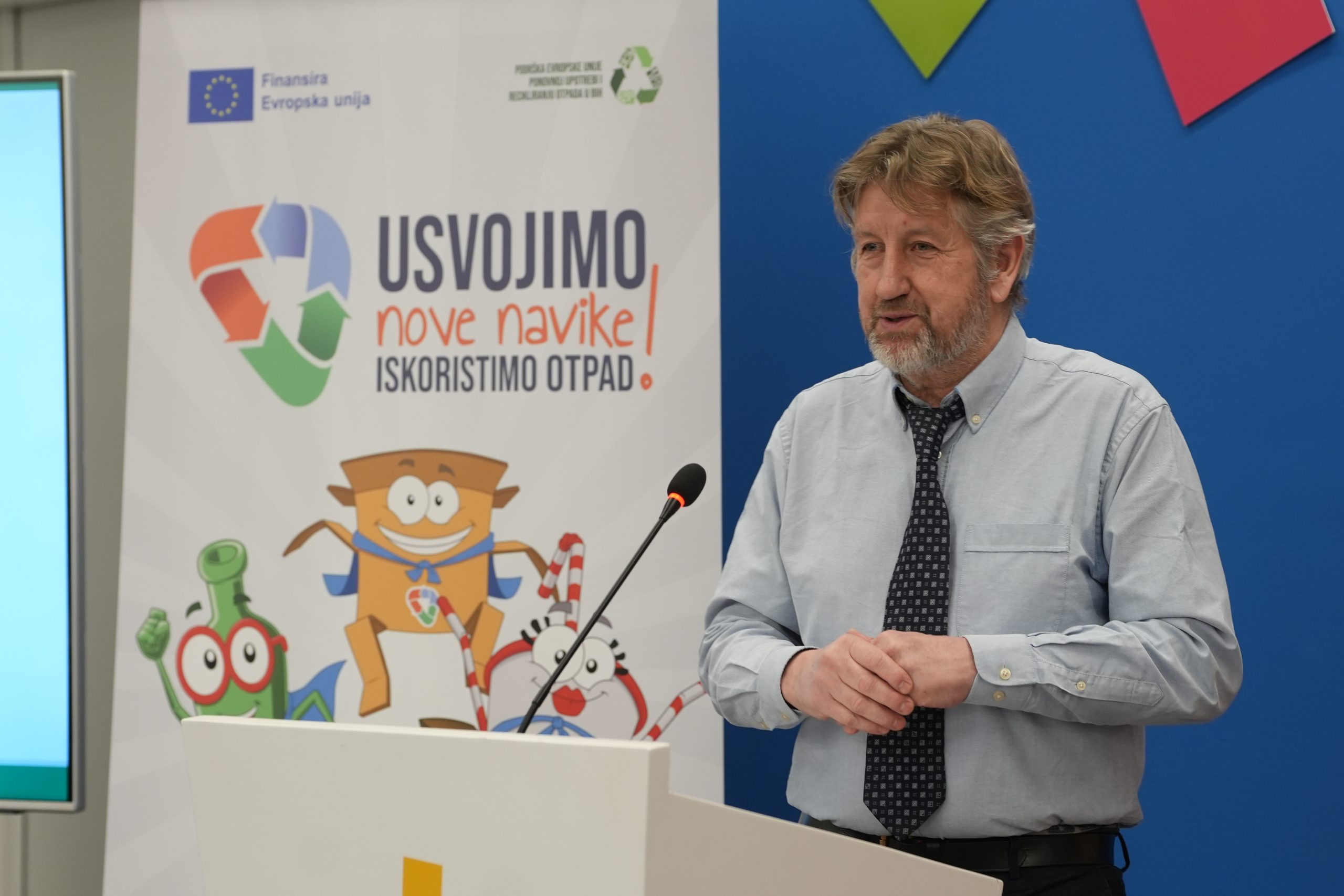
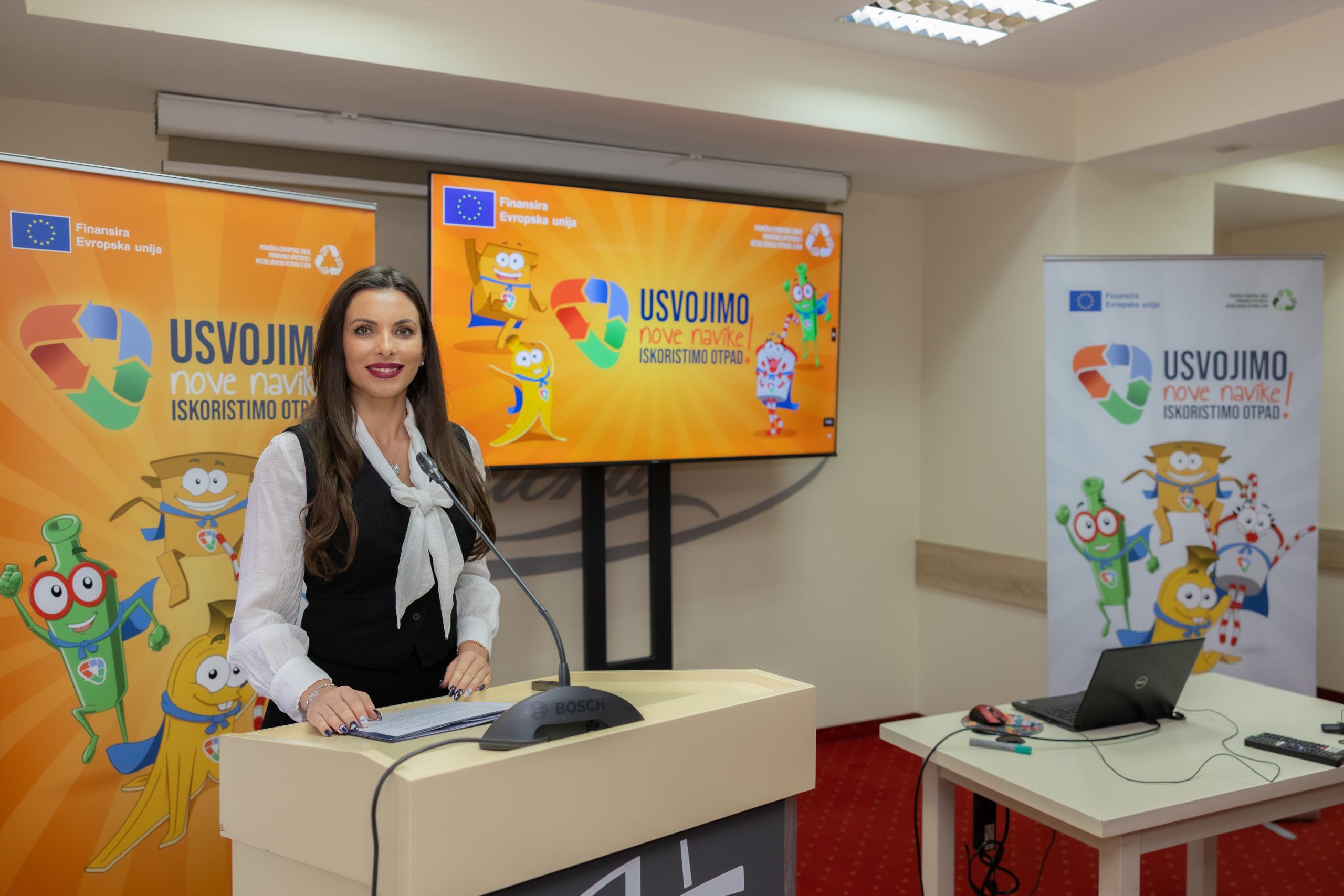
The campaign will be launched with three public events across the country – in Sarajevo, Brčko and at another upcoming event in Banja Luka.
These events bring together representatives of key sectors and key actors on the project, the Delegation of the European Union, experts in the field of waste management and circular economy, as well as partner organizations – emphasizing that improving waste management is a shared responsibility.
In Sarajevo, Europe House also presented the success of its “Trashformers 2025” campaign, a school competition aimed at educating children about good waste management practices. Leaders of sustainable business also contributed in Brcko, including Tamara Đurić, founder and director of Magbago, an ecological fashion brand.
From awareness to action
During 2026, the campaign will be implemented in stages, guiding citizens and competent institutions, raising their awareness and leading them towards knowledge, changing attitudes and daily practice. Following the January launch, activities include regular articles, newsletters, social media content, media interviews and success story videos.
In the spring, the focus shifts to the learning process and active participation, through community competitions in partnership with the Ekograd organization, encouraging recycling through their Recyclomats, as well as the Trashformers 2026 school competition, realized in cooperation with Europe House, with the aim of engaging young people.