

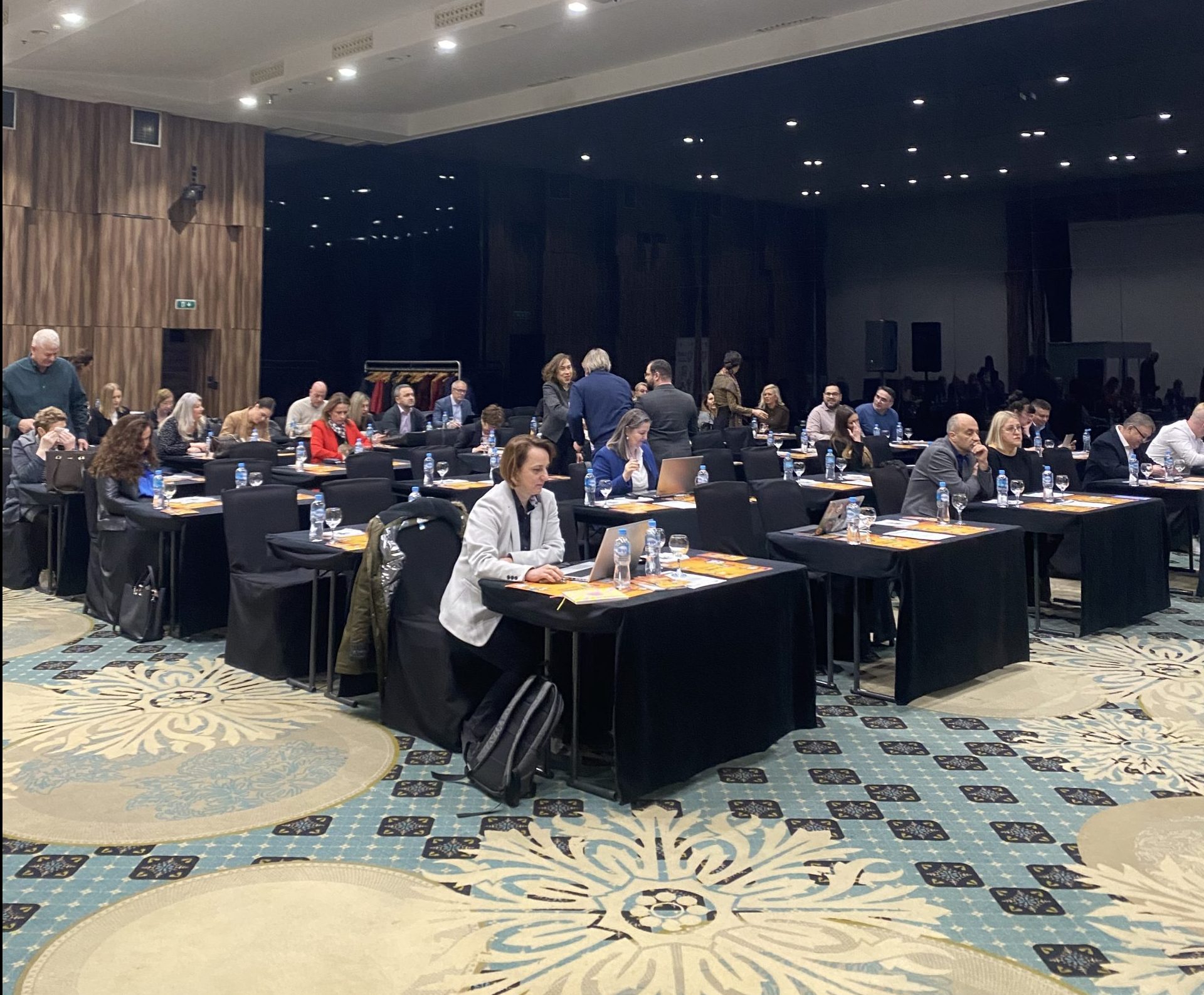
On 26 February 2026, stakeholders from across Bosnia and Herzegovina gathered at Hotel Hills in Sarajevo for a full-day Thematic Working Groups (TWG) Workshop, focused on accelerating progress toward improved waste management systems and a stronger circular economy framework.
The workshop brought together government representatives, technical experts, financial specialists and communications leaders to review progress, align on priorities, and strengthen coordination across four critical areas: legislation and policy, waste management operations, finance and economics, and education and public awareness.
Setting the Direction
The workshop opened with an introduction from E. Scott Crossett, CETAP Team Leader, who outlined the objectives of the day: to ensure that reform efforts are practical, coordinated, and aligned with European Union standards, while remaining grounded in the specific needs and realities of Bosnia and Herzegovina.
Legislation and Policy
The first session focused on legislative alignment and policy development.
Dr. Ion Nae Musetoiu presented the scope of work related to legislative alignment, outlining the process and stakeholder engagement approach required to harmonise domestic legislation with EU environmental acquis. Emphasis was placed on transparency, consultation, and structured implementation pathways.
Simona Mihaela Ghita followed with a presentation on Extended Producer Responsibility (EPR) schemes — examining current systems and exploring how future reforms can ensure producers take greater responsibility for the lifecycle of products and packaging.
The session concluded with a moderated discussion, allowing participants to raise practical questions about enforcement, institutional coordination, and implementation timelines.
Waste Management Operations
The second session moved from policy to implementation.
Maria Krasteva presented updated Waste Management Guidelines, highlighting the importance of standardised procedures, clear operational benchmarks, and improved coordination between municipalities and service providers.
Mihail Asenov then introduced key components of Waste Management Plans, outlining how strategic planning at local and entity levels can ensure measurable improvements in waste collection, separation, and treatment.
Discussions focused on bridging the gap between planning and execution — ensuring that operational improvements are realistic, funded, and supported by trained personnel.
Finance and Economics
Dr. Paolo Bacca presented on developing bankable projects and feasibility studies, emphasising the importance of preparing investment-ready documentation that meets international financial institution standards.
Tomas Thernstrom then shared findings and recommendations from Sub-Activity 1.1 on economic analysis, highlighting key financial challenges and opportunities within the waste management sector. And showcased best practices and their results from Sweden.
Education and Public Awareness
The final session addressed behavioural changes and stakeholder education.
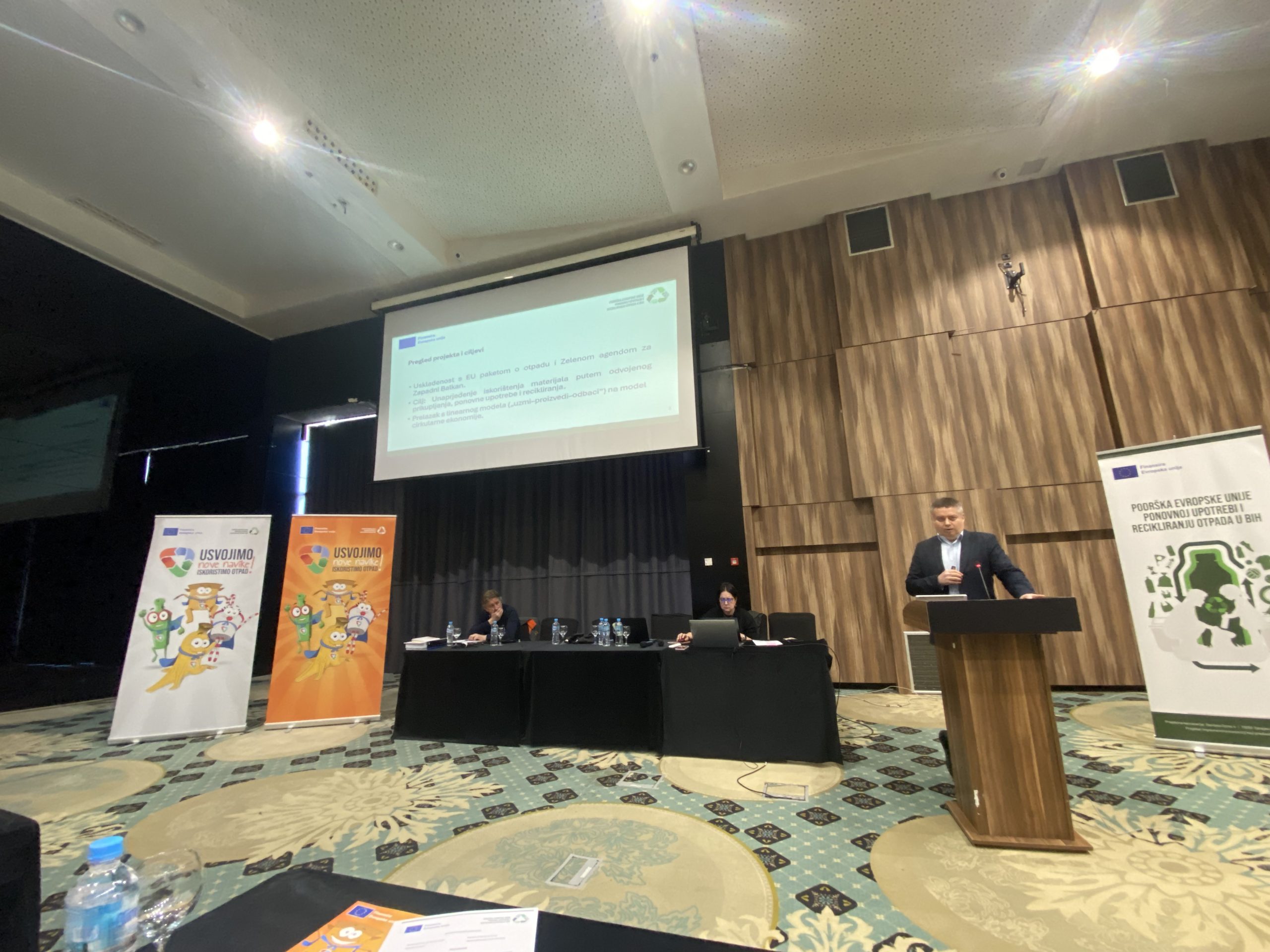
Scott Crossett presented the Public Awareness Campaign Strategy, outlining a structured approach to influencing habits, increasing recycling participation, and improving waste separation quality. The strategy emphasises clarity of messaging, community engagement, and long-term behaviour change rather than short-term visibility.
A second presentation by E. Scott Crossett detailed the upcoming series of trainings, stakeholder conferences, and roundtables designed to build institutional capacity and ensure that reform is supported by informed and engaged actors at all levels.
Conclusion
The members of the Thematic Working Group play an integral role in CETAP and their time and feedback is greatly appreciated, the team at CETAP would like to once again thank all of our TWG members for dedicating their time to the session and for their valuable input.