How the red carpet dress was made from waste materials
When model Sarah Čerkez appeared on the Sarajevo Film Festival red carpet in a dress designed by Marko Feher, its shimmering surface told only part of the story. The dress began with material destined for disposal.
Created by CETAP in partnership with Eterna and Feher for the “Let’s adopt new habits. Let’s use waste!” campaign, the project turned waste textiles into a striking example of what thoughtful design and skilled work can achieve.
Behind the dress
The team started with around two and a half metres of discarded material. From it, they laser cut approximately 2,000 heart-shaped pieces. Each heart was soaked for several days to remove a damaged surface layer, then cleaned individually by hand.
Turning those pieces into a dress brought another challenge: they needed to move naturally with the wearer. Marko’s team worked through the construction, adding thousands of hand stitches and incorporating red thread into the design. The lower part of the dress was made from deadstock tulle—fabric left unused by the textile industry.
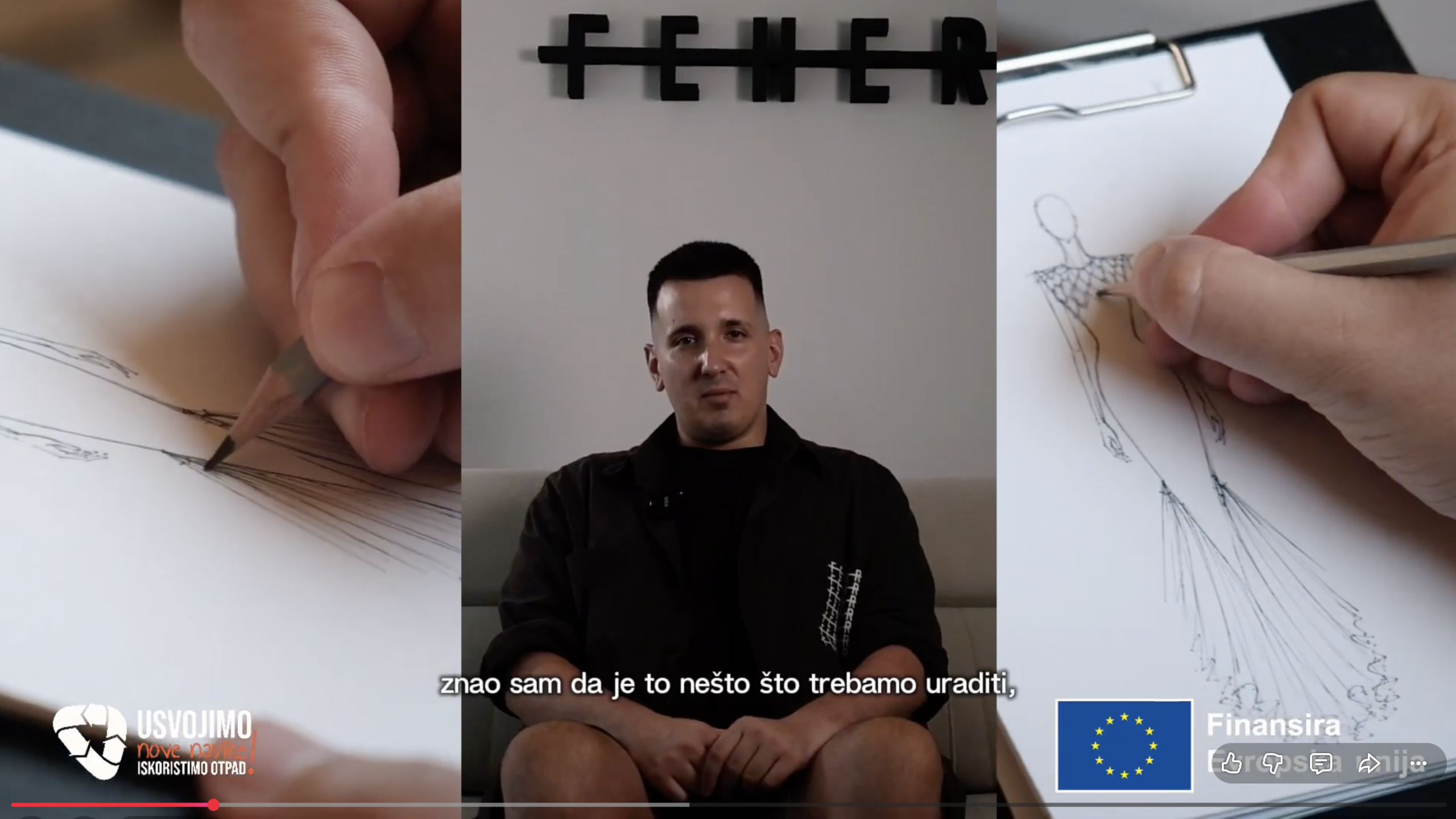
The behind-the-scenes film shows the time this took: careful cleaning, sewing, pressing, fittings and adjustments, with the team working late to bring the garment together. Every detail seen on the red carpet rested on work done far from it.
Seeing value in what remains
Feher and Eterna set out to make a dress that could stand alongside couture pieces while keeping its discarded origins central to the story. The result gave materials marked as waste a new purpose through design, technical skill and patient craftsmanship.
That is the idea at the heart of CETAP’s campaign. The dress asks us to look again at materials we might otherwise throw away—and to consider what becomes possible when we adopt new habits and use waste.
Watch the video to see how the dress came to life from waste materials.